Stroke patients are learning to use their fingers again by tapping into 'backup' nerve pathways we thought were useless for fine movement.
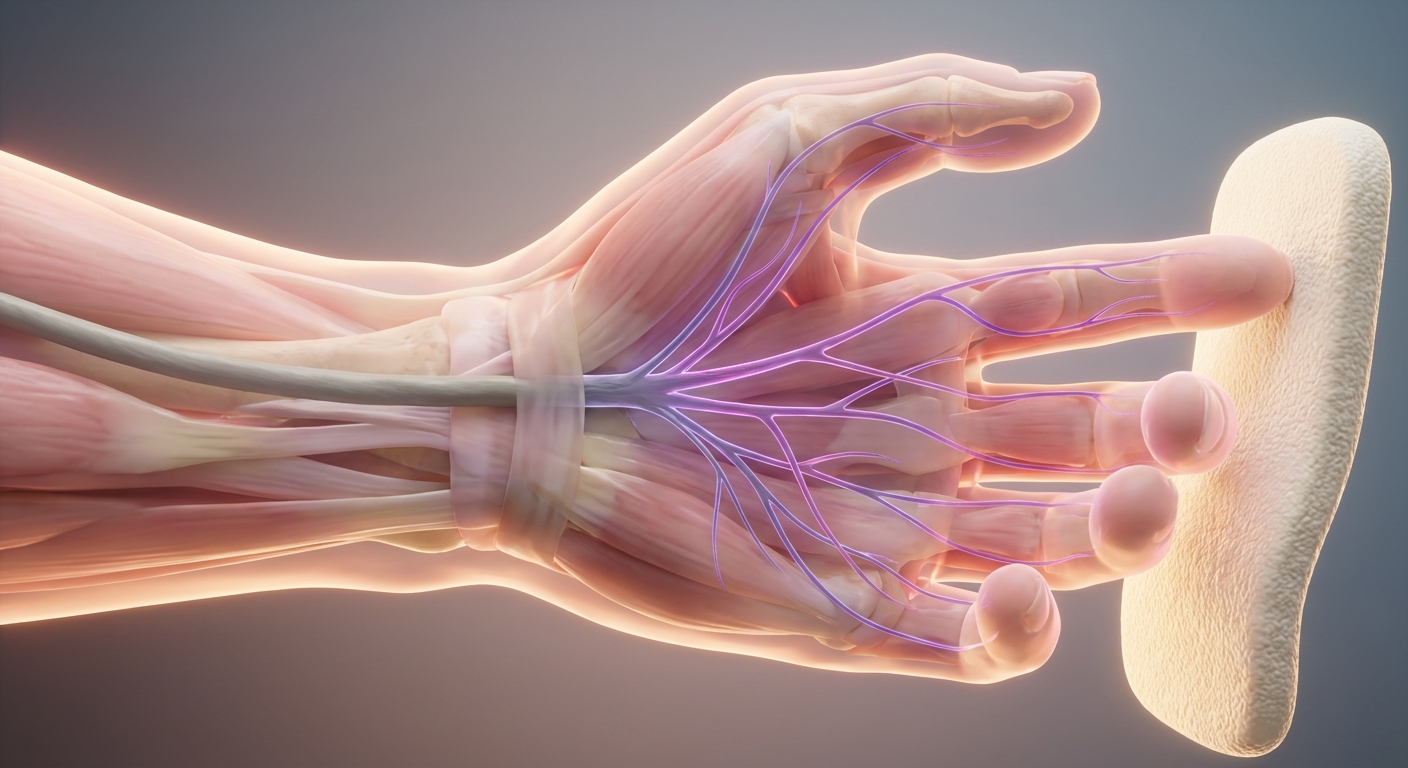
Standard neuroanatomy suggests that dexterity is only possible via direct 'high-speed' connections between the brain and spinal cord. This study reveals that the brain can bypass these damaged links and 'sculpt' indirect, messy reflex circuits to perform precise movements, fundamentally changing our understanding of how the motor system recovers.
Recovery of Dexterous Motor Control via Non-Monosynaptic Corticospinal Pathways
medRxiv · 10.64898/2026.03.24.26348827
Fine motor control of the human arm is assumed to depend on monosynaptic connections between the motor cortex and spinal motoneurons. We report that people with post-stroke hemiparesis could regain dexterous control using non-monosynaptic corticospinal tract (CST) projections during epidural cervical spinal cord stimulation (SCS). Participants in our pilot clinical study demonstrated the ability to improve strength, reaching smoothness, and fine force control of the arm and hand while receiving