An AI agent designed its own laser experiment and stumbled upon a new physical mechanism that mirrors the way human brains process attention.
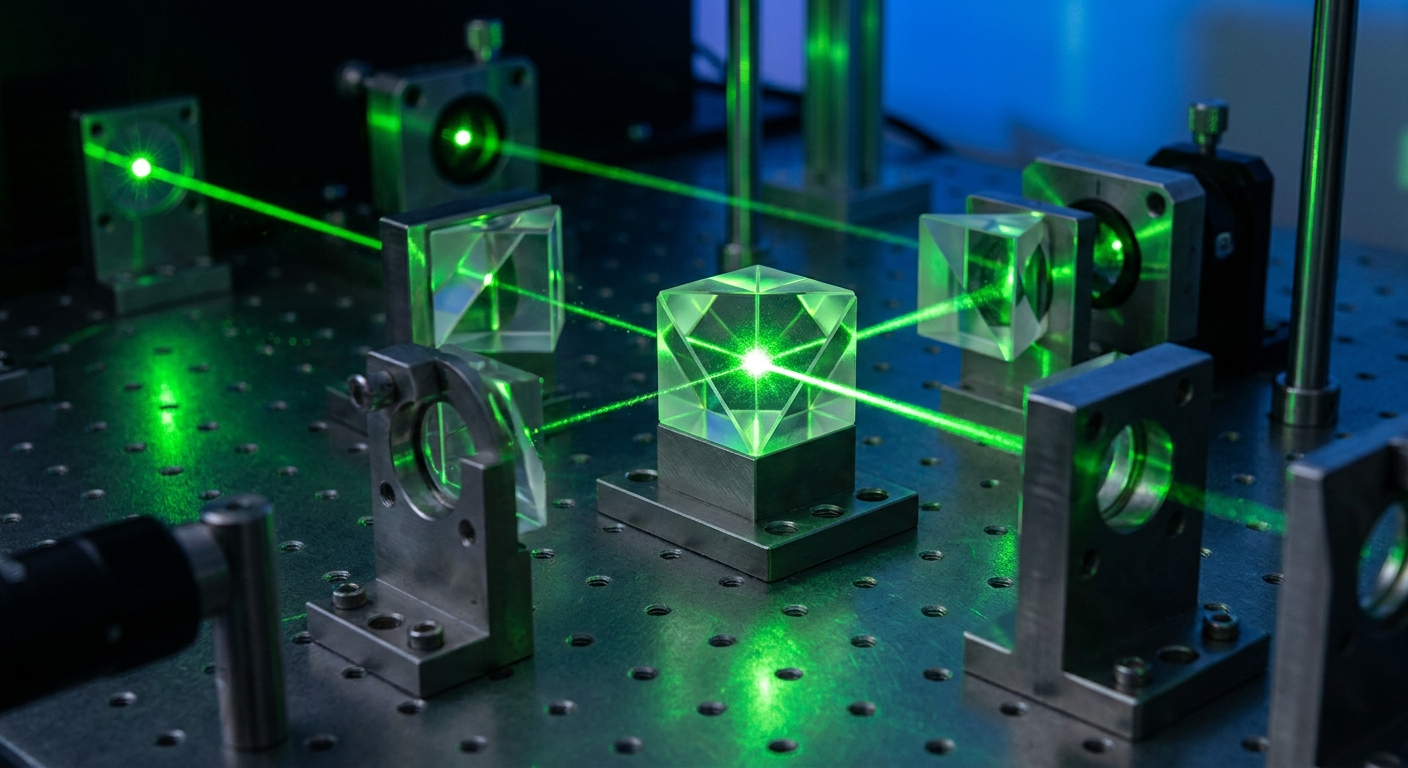
This autonomous system used a large language model to control a real-world optical laboratory without human intervention. It successfully reproduced complex historical experiments and then proposed an entirely new phenomenon called optical bilinear interaction. Previously, AI was used to crunch data for humans, but this machine actually hypothesized and verified a physical law on its own. This discovery matches the mathematical structure of the Transformer architecture used in modern AI. It marks the first time a machine has moved beyond assisting scientists to becoming a primary discoverer in the physical world.
End-to-end autonomous scientific discovery on a real optical platform
arXiv · 2604.27092
Scientific research has long been human-led, driving new knowledge and transformative technologies through the continual revision of questions, methods and claims as evidence accumulates. Although large language model (LLM)-based agents are beginning to move beyond assisting predefined research workflows, none has yet demonstrated end-to-end autonomous discovery in a real physical system that produces a nontrivial result supported by experimental evidence. Here we introduce Qiushi Discovery Engi