A political opponent's face triggers a defensive alarm in the human brain within just 150 milliseconds.
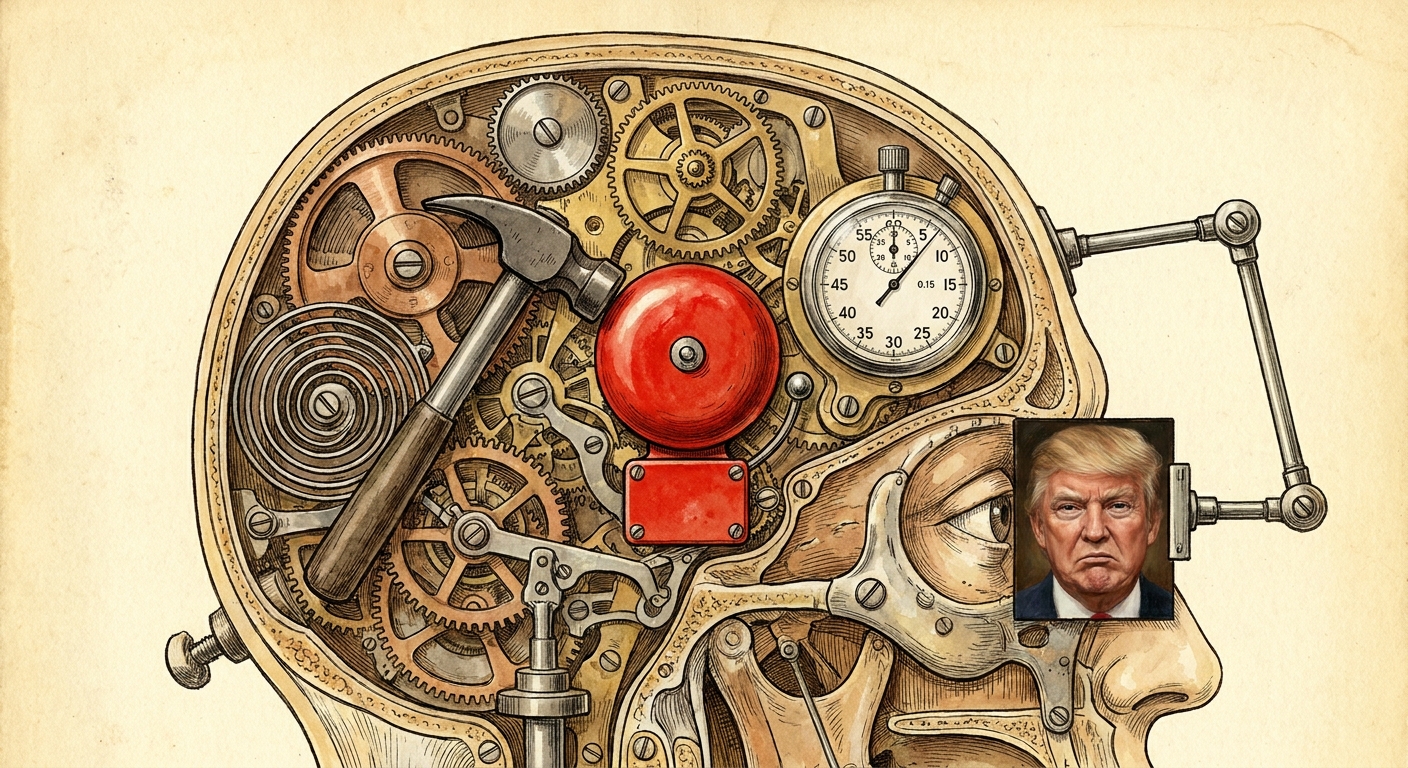
Brain circuits react to political opposition on a timescale far faster than logical reasoning. Most people assume that political disagreement starts with hearing a platform or judging a person's character. Electrical signals in the brain reveal that the nervous system identifies an enemy leader before the viewer even realizes who they are looking at. This rapid-fire response bypasses the prefrontal cortex where complex thought occurs. Campaigns exploit this primitive circuit because the brain has already decided to reject a message before the first word is spoken.
The Temporal Sequence of Party Leader Incongruence: a data-driven ERP study
PsyArXiv · 2b8qg_v1
Partisanship is a powerful social identity that not only conditions how citizens vote, but also how they reason. The ’Hot Cognition’ hypothesis posits that affective associations are activated immediately upon exposure to political stimuli, such as party leaders delivering polarizing messages. The integration of the speaker with the message might be comprised of temporally distinct processes: automatic affective response triggered by the identity of the source (disliked leader), and a more consc