Thinking about an alternative way to solve a puzzle can trick your brain into 'remembering' that you actually performed the path you rejected.
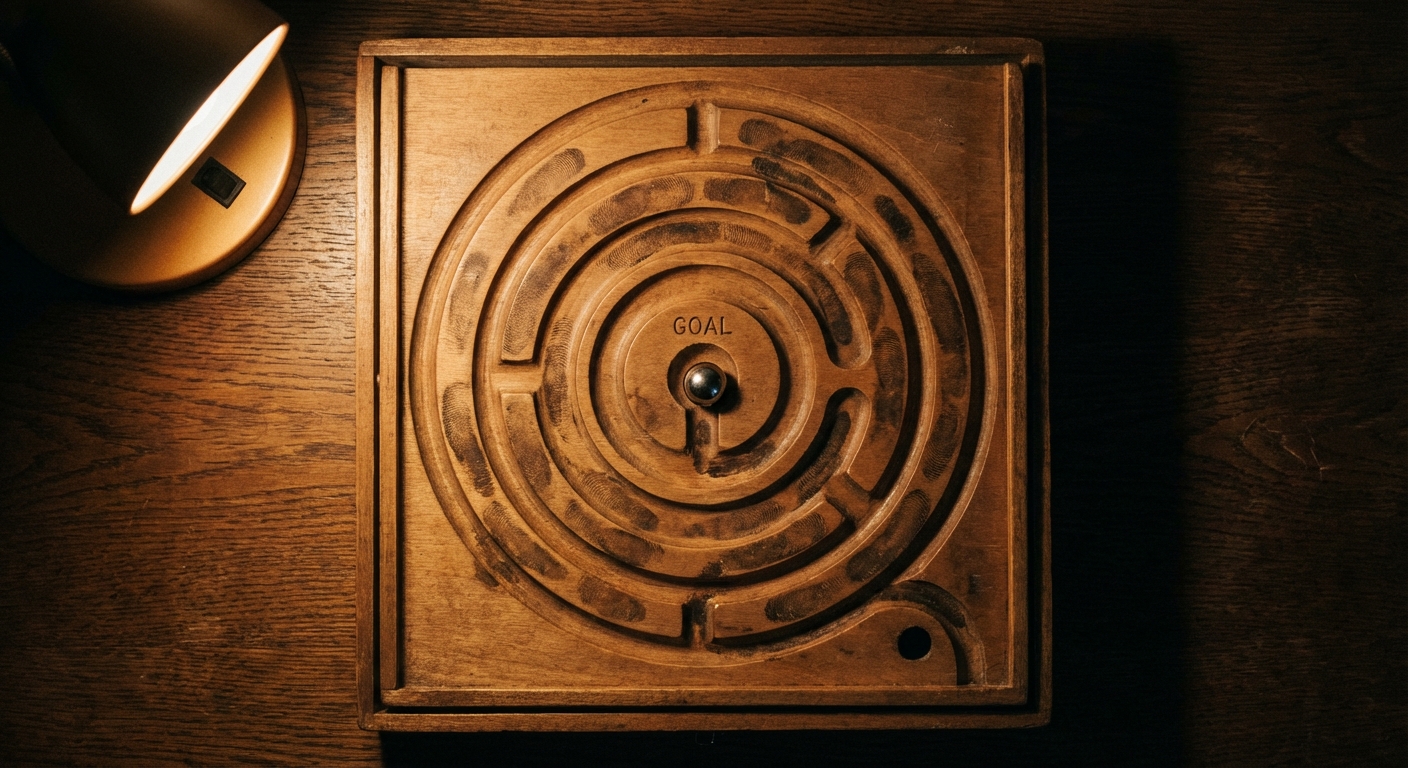
We usually think of memories as records of what happened, but this study shows that the act of planning 'the road not taken' leaves mnemonic traces so strong they are indistinguishable from real actions. In experiments, people solving puzzles frequently developed false memories of seeing the steps of the solution they considered but never used.
The Cost of “What Might Have Been”: False Memories for Counterfactual Actions
PsyArXiv · tfm37_v1
Deciding what to do should typically involve considering what could have been done, but in fact was not done. We tested whether such unchosen alternative action paths leave traces in memory. Across two behavioural experiments, participants solved a modified Tower of London (ToL) task in which each problem afforded two alternative and equivalent optimal solution paths. They then undertook a recognition test in which they viewed configurations of the ToL drawn either from the chosen path, the unc