It’s weirdly harder to guess how two people will move together than it is to predict what one person will do alone.
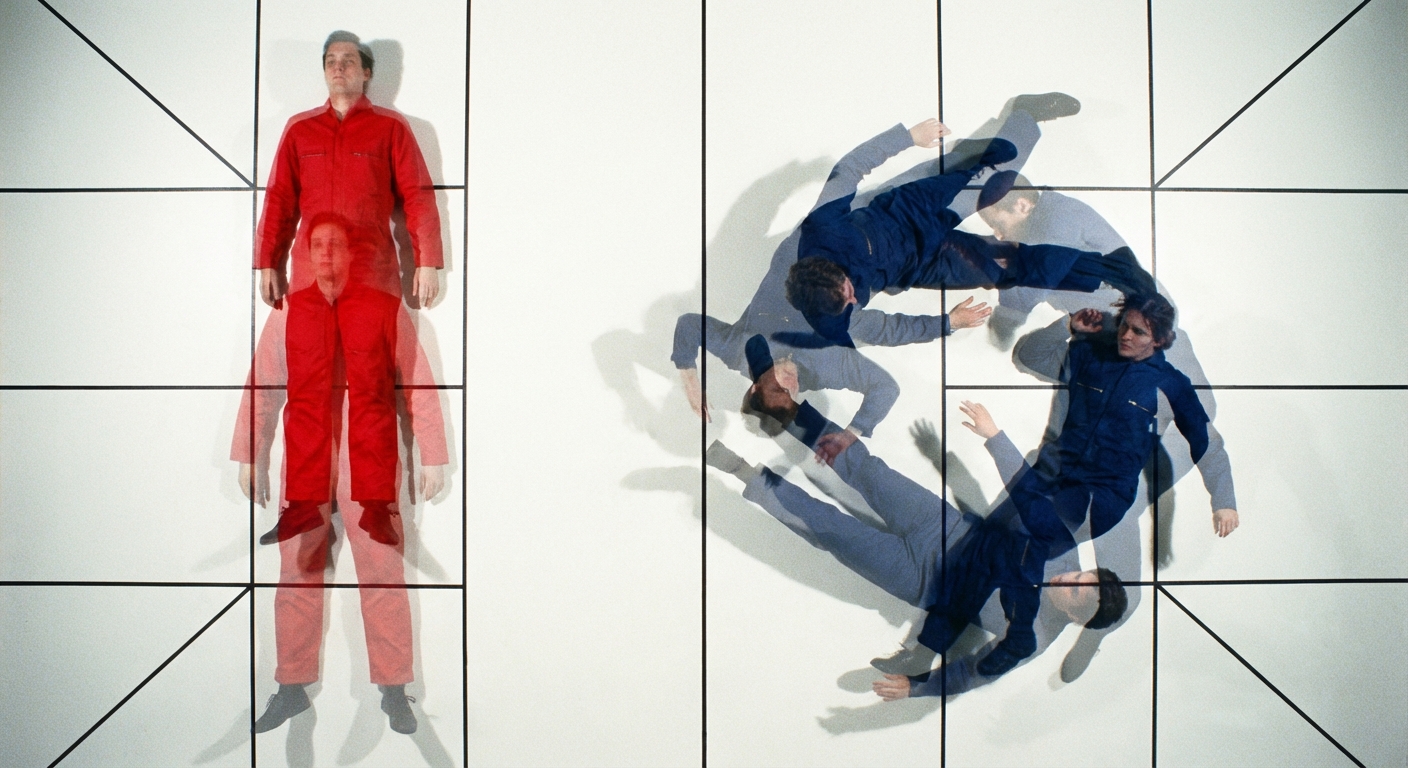
While we usually assume social cooperation makes behavior more reliable and predictable, our brains actually become more skeptical when watching pairs. Instead of using mental shortcuts to guess what happens next, the brain switches to a slower, more cautious 'wait-and-see' mode to process the extra sensory info of a joint task.
Observers exhibit greater caution and faster evidence accumulation when identifying joint versus individual actions
PsyArXiv · ybam3_v1
Coordination requires anticipating and adapting to others' actions in real time. While research has shown that observers predict others’ solo actions, little is known about how predictive processes change when observing joint actions. We tested whether, for joint actions, observers form (1) stronger predictions because they expect others to act more reliably due to social considerations (e.g., commitment), or (2) weaker predictions because they expect coordination to introduce additional sources